My story began a day in June 2011 when I went to feed my animals one morning and noticed that my dog, a male Miniature Pincher named "Sarge", had 2 small circular patches of missing hair on his back. I didn't think much of it at the time as I also have a female cat in the household that sometimes slaps the s#!t out of my dog for eating out of her bowl. My dog and cat have a love/hate relationship that my dog dominates, but there has been very rare occasions where my cat has been pushed to the limit and had decided to strike back. I thought this was an incident where my cat had lashed my dog and caused some minor bruising and thought little of it.
Days later, while getting my dog ready for a walk in the park I had noticed that one of the bald spots had grown almost double in size, while the other had stayed the same. I could now clearly see Sarge's white flesh from a spot on his back about an inch south of his shoulder blades. At this point I knew something was up. And being perfectly honest, this was exactly the point where I knew that I was not going to take my dog to the vet.
The reason I made the decision to rule out a vet visit was the fact that earlier in the year, my sister's tiny teacup yorkie named "Mocha" had gotten sick, and we rushed her to the vet. The first thing they asked for was money - even before they asked what was wrong with the dog. About 15 minutes later they came with the bill to show us the cost we'd have to pay to help them fight the dog's infection. Which amounted to $800 to keep the dog overnight, and $1200.00 to be billed later. We paid the $800 and the next morning we got a call saying that Mocha died in the animal hospital. In that same phone call, they asked for money, and the next day we get a bill for $1200.00 in the mail.
So my mind was made up on NO vet, and that I was going to ID the problem and cure it myself.
Showing posts with label how to cure mange. Show all posts
Showing posts with label how to cure mange. Show all posts
8.9.11

2. The first thing I did - Research
Even though my dog had this small patch on his back, and the smaller one on this upper ribcage area. I still didn't think much of it, I thought it was a simple rash, inflammation, or fungus that I could knock out with something from the pharmacy. But due to some work issues I had to leave my home for a week. When I came back, my dog's back looked HORRIBLE. The bald patch was now taking up about 1/4th of his back, the one on his rib cage had doubled in sized and he had 3 or 4 more smaller ones scattered around his body, specifically his legs and chest. The sight of all this turned my stomach. This is where I immediately took action, hit the web and started doing research on the symptoms. I sat for hours reading and looking at pictures and determined that Sarge either had a case of RINGWORM or he was suffering from MANGE as both carry just about the same physical symptoms. Further research told me that both conditions take different treatments. I decided to treat Sarge for ringworm because I had years ago contracted that disease from hanging around in my backyard where Sarge hangs. So, I checked to see if over-the-counter ringworm medication would be safe for a small dog, and I went and bought Lotrimin and applied it to the affected areas of my dog.
After two days of this, the bald spots spread out dramatically in size even more as if the medication had made it worse. But after a few more days I noticed that they had stopped spreading and that hair was growing back over most of these spots, so I felt releived and thought this was the beginning of the end of Sarge's condotion...
... I couldnt be more wrong.
Shortly after, the effects that I thought the medication was having had ceased. A few more bald spots appeared I started to see a yellowish wax-like crusting at the edges of the spots. And most telling, is that the spots no longer took on the circular shape that identifies ringworm, they were just spreading wildly. I went back to google and discovered that my dog did not have the ringworm, even though I had been treating him for it for 2 weeks. It was more clear to me that his symptoms resembled that of MANGE. But to make matters more confusing, I learned that there were THREE types of mange -- each needing different treatments.

*Sigh*
4. The WAR against DOG MANGE Began with Neem Oil
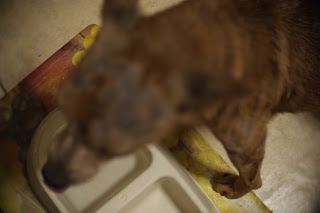
So now I've learned what mange is, but didn't know what type of mange my dog Sarge is suffering with. I quickly rule out localized demodectic mange because his mange is widespread. There's nothing local about it, and the fact that me some of my family members have been in close contact with our dog and not come down with any sort of ailment have led me to rule out Sarcoptic mites as the culprit, but I didn't know for sure. All I knew was that we were gonna cure this bulls#it and cure it now. By now, my dog was checkered with spots of various sizes with the initial two being HUGE. He had a large bald patch on his back and one on his ribs and it looked like they would soon connect to form a large bald spot. He also had lost 80% of the hair on his legs and toes. My dog also started to look weak and depressed. It was clear that his health was being affected by the mange. Some people told me that he looked like he was going to die soon. I knew he wouldn't die, I'm a fighter and so is my dog, so I had confidence that we would see it through. I looked at my dog and actually told him that I was gonna bring him back to glory.
 The first thing I did was go out and get 100% pure Neem Oil (it STINKS). I had learned that the neem oil has some extreme effects on critters, as it kills some, deters others, and make some insects instantly lose their sanity. I wanted to try this myself, so I used cotton balls to apply the oil to Sarge. The whole room stunk but instantly I started to see fleas coming out from between his remaiing hairs with the intent to flee the area. The fleas were actually trying to get away from my dog! Just to see what would happen, I dabbed some neem oil directly on a flea and it froze.. paralyzed on contact.
The next morning what I saw was shocking. The condition of my dogs feet and legs looked noticeably better, as a lot of the crusting had come off and a lot of hair had seem to grow over night. Over the course of the next 2 or 3 days, light hair became visible on his sores. After some more research I learned that I was using too much oil and that I could mix it with a "carrier oil" to help carry the neem oil under the skin where the mites dwell.
 I had learned that neem has a lot of benefits when used against mange. The neem oil kills the eggs of both demodectic and sarcoptic mites. It also kills and/or changes the behavor of the adult mites on the body. Once they come in contact with neem, even in trace amounts - they will either die or forget they are mites and do things that mites just dont do. Neem has this effect on quite a few insects, causing them to forget to do what they naturally do.... such as lay eggs.
I also learned that these mites burrow holes in the surface of the skin where they dwell. Every few days, the females come to the surface to lay eggs. The eggs then hatch and those new mites then began to dig into your poor dogs skin and recreates the cycle. Keep in mind that these mite ARE parasites and they are biting and sucking your dog's blood to survive!
 So I put one and one together and figured that rubbing neem oil into my dog's skin would inhibit the mites when they come to the surface, it was now time to get some to get inside the skin to catch the mites that have burrowed in there. I decided to use some 100% african Shea Butter at first because It is non-greasy and absorbs quickly into the skin, But you can use any carrier oil, with grapeseed oil being possibly the best choice. I melted the shea butter and poured in a few drops of the neem oil and massaged it into Sarge's torso, back and forehead. It's important to not to use too much of the oil because one, only a trace amount is needed to DAMAGE critters, and two, too much would work against the carrier being absorbed.easily into the skin. So you should always have much more carrier than neem oil in the solution.
 The shea butter worked well, but I noticed it left a whitish film on my dog's skin that was visible hours after application. I switched to sesame oil, which went smoothly. NEEM OIL AND SESAME SEED OIL to BEGIN THE WAR.
 |
| "Sarge", frail and weakened by dog mange. |
 The first thing I did was go out and get 100% pure Neem Oil (it STINKS). I had learned that the neem oil has some extreme effects on critters, as it kills some, deters others, and make some insects instantly lose their sanity. I wanted to try this myself, so I used cotton balls to apply the oil to Sarge. The whole room stunk but instantly I started to see fleas coming out from between his remaiing hairs with the intent to flee the area. The fleas were actually trying to get away from my dog! Just to see what would happen, I dabbed some neem oil directly on a flea and it froze.. paralyzed on contact.
 I had learned that neem has a lot of benefits when used against mange. The neem oil kills the eggs of both demodectic and sarcoptic mites. It also kills and/or changes the behavor of the adult mites on the body. Once they come in contact with neem, even in trace amounts - they will either die or forget they are mites and do things that mites just dont do. Neem has this effect on quite a few insects, causing them to forget to do what they naturally do.... such as lay eggs.
I also learned that these mites burrow holes in the surface of the skin where they dwell. Every few days, the females come to the surface to lay eggs. The eggs then hatch and those new mites then began to dig into your poor dogs skin and recreates the cycle. Keep in mind that these mite ARE parasites and they are biting and sucking your dog's blood to survive!


7. So.. my full Dog Mange Regimen.
The weekly procedure is simple.
Every Morning:
1 Drop from a Fish Oil Capsule popped and mixed with food
1/4 Echinacea Tablet crushed and mixed with same food
1 Brewers Yeast tablet fed whole
1/2 teaspoon of Apple Cider Vinegar to full bowl of drinking water
Once A Week: Mange Armageddon Bath aka Ted's Mange Cure/Bath
The Day After Every Bath:
Neem Oil mixed with (Grapeseed Oil, Almond Oil, or Sesame Oil)
Massaged into entire body at a 5:1 ratio (five parts carrier to 1 part neem oil)
Make sure that you wash your dog's bedding and keep area that your dog frequents CLEAN. MITES CAN AND DO HANG OUT IN THESE AREAS AND WILL ATTEMPT TO HOP BACK ON YOUR DOG. Last thing you want is to give your dog an armageddon bath to have him go lay down in a mite infestation.
8. MY DOG CURED from MANGE...THE RESULTS
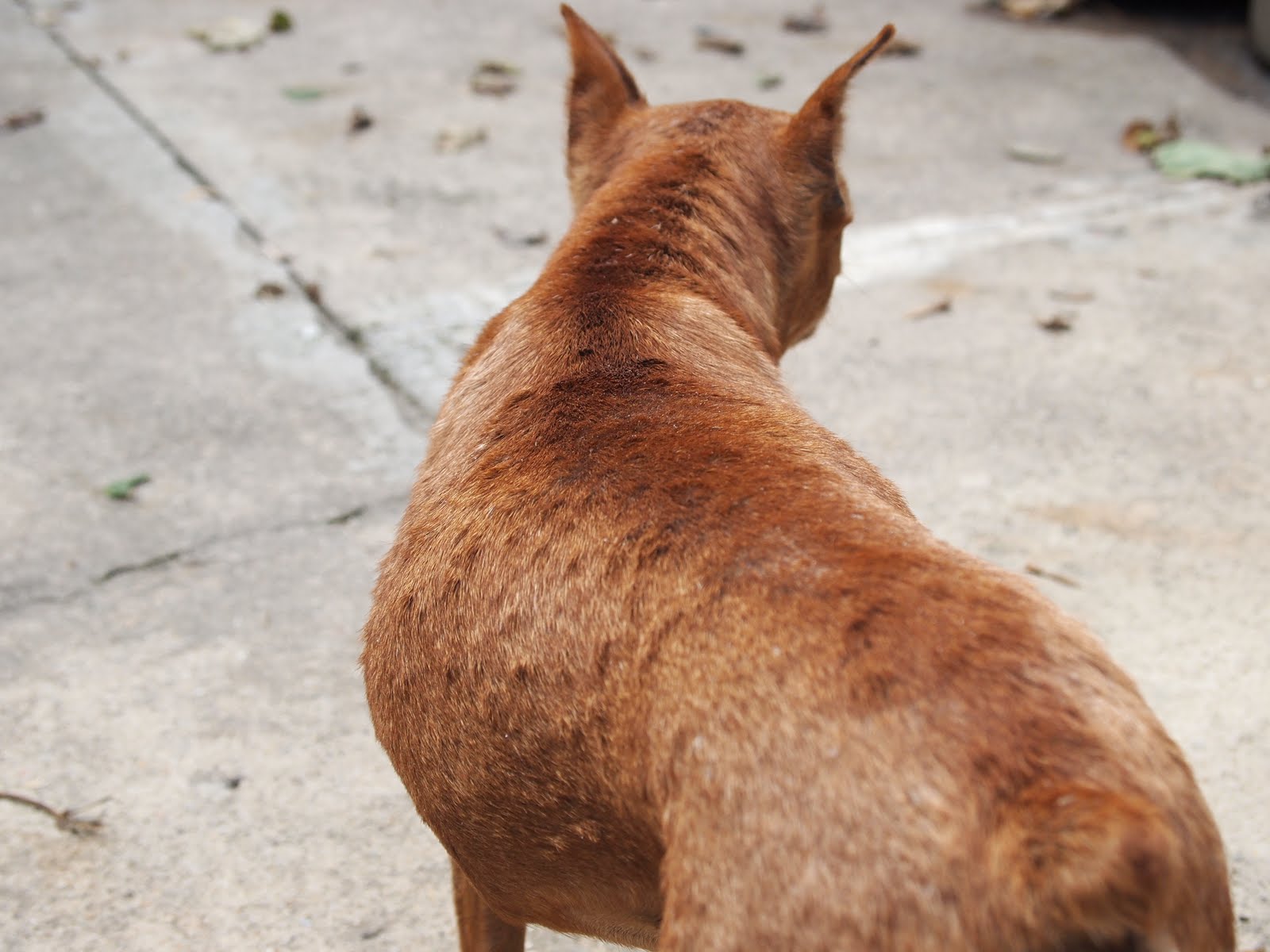
There is nothing else to be said. My dog is mite free and has been for the past two weeks. His hair has growing back nicely and should be the proper length within 2 weeks. The lil bumps you see in his fur are due to the little crusts from his healed lesions peeling from the skin, they wash off in every bath. I credit his speedy recovery to the simultaneous internal and external care. All information describing how we cured and DESTROYED dog mange in 3 weeks is here on this blog in detail. But feel free to contact me with any questions.


 |
| Sarge, cured of mange, with hair nicely growing back. |
With that said, here's a disclaimer: I am not a veterinarian and I'm not qualified to give any medical advice. People say that if you feel your dog is sick, you should take it to some sort of qualified professional. On this blog, I am merely documenting my own experience on how my dog and I fought against mange and mites on our own and are enjoying a thoroughly lopsided victory.


Subscribe to:
Posts (Atom)